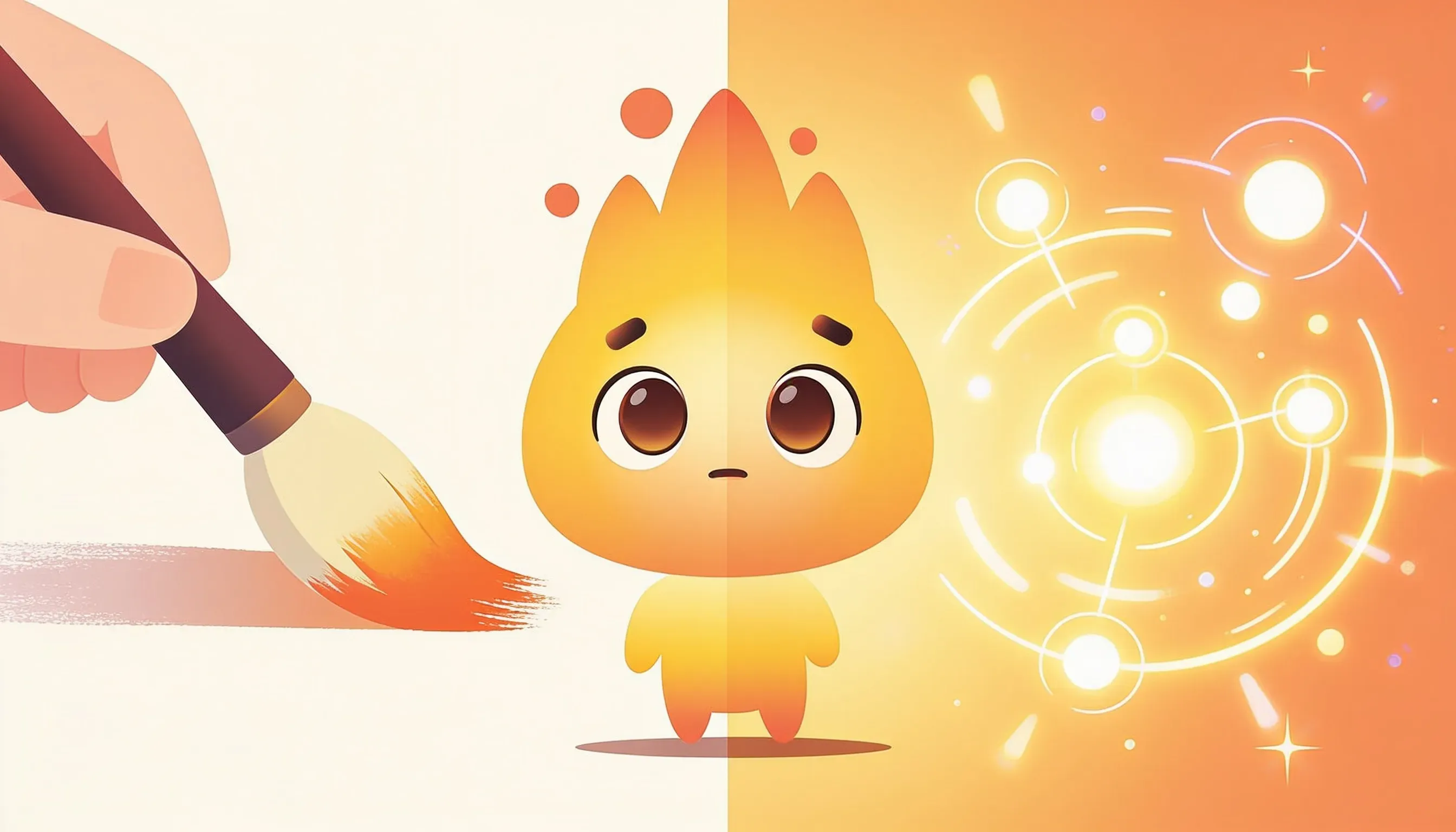
AI vs. Traditional Illustration for Children's Books
An even-handed look at AI illustration for children's books versus traditional hand-drawn art, covering cost, speed, consistency, and creative control.
AI vs. Traditional Illustration for Children's Books: Pros and Cons
Picking the right pictures can make or break a children's book. The art carries the emotion, sets the pace, and helps young readers fall in love with a character. Today, authors and parents face a choice that did not exist a decade ago: hire a human illustrator or use AI illustration for children's books. Neither option is automatically better. Each shines in different situations, and the smartest creators know when to reach for which.
This guide compares both approaches across cost, speed, consistency, style range, control, and the human touch, so you can choose with confidence.
Traditional Illustration: The Human Touch
A professional illustrator brings years of craft, intuition, and emotional depth to every page.
Pros
- Deep originality and a signature artistic voice
- Intuitive emotional storytelling and subtle expression
- Hands-on collaboration and creative problem-solving
- A finished product with genuine artisanal value
Cons
- High cost, often thousands for a full picture book
- Slow timelines, frequently weeks or months
- Limited revisions before fees climb
- Availability depends on the artist's schedule
Traditional art is unmatched when you want a truly unique aesthetic, a long-term creative partnership, or a heirloom-quality book worth the investment.
AI Illustration: Speed and Scale
Modern AI tools generate polished, colorful artwork in minutes, opening the door for many more people to publish.
Pros
- Dramatically lower cost, often a fraction of hiring an artist
- Near-instant results and fast iteration
- Easy experimentation with many styles and scenes
- Accessible to authors with no drawing skills
Cons
- Less of a singular, human artistic fingerprint
- Early tools struggled to keep a character looking the same
- Output quality depends on good prompts and a strong platform
- Requires a human eye to curate and refine results
The old knock against AI was consistency: a hero with red hair in one scene might appear blonde in the next. This is exactly where purpose-built platforms have improved. AnyTale, for example, locks a character's look across every page, so your protagonist stays recognizable from the first spread to the last.
Consistency and Style Range
Consistency used to favor traditional illustration, where one artist hand-controls every detail. Today, AI built for storytelling closes much of that gap by anchoring characters, palettes, and settings throughout a book.
Style range tilts toward AI. A human illustrator typically works within one beloved style. AI lets you preview watercolor, cartoon, storybook, or painterly looks side by side before committing, which is ideal when you are still searching for the right feel.
Control and Creativity
Control is nuanced. With a human, you guide through conversation and feedback, trusting their expertise. With AI, you steer directly through prompts and instant regeneration, iterating until a page feels right.
It is a myth that AI removes human creativity. The author still invents the story, casts the characters, chooses the mood, and curates every image. AI handles the labor of rendering, freeing you to focus on the imaginative decisions that matter most.
Which Is Right for You?
Choose traditional illustration if you:
- Want a one-of-a-kind artistic signature
- Have a generous budget and a flexible timeline
- Value a personal collaboration with an artist
- Are creating a premium or collectible edition
Choose AI illustration if you:
- Need an affordable, fast path to a finished book
- Are making a personalized gift for a specific child
- Want to test many styles before deciding
- Have a great story but cannot draw
Many creators happily blend both: drafting and personalizing with AI, then commissioning an artist for a special cover or keepsake print.
Conclusion
There is no single winner. Traditional illustration delivers irreplaceable artistry and a human soul, while AI illustration for children's books delivers speed, affordability, and creative flexibility that puts publishing within everyone's reach. The right choice depends on your budget, timeline, and goals.
If you want to bring a story to life today, with consistent characters and beautiful art you can shape yourself, AnyTale makes it simple to create, illustrate, translate, and self-publish a personalized children's book. Try it and see your tale take shape, page by page.
Share this article
Need help? Have a question? Chat with our team — we're happy to help.